Govardhan Puja forms an important part of the
celebrations of Diwali. Learn about the legends of Govardhan Pooja by
exploring the article.
Govardhan Puja
|
The fourth day of Diwali celebrations is 'Padwa' or
'Varshapratipada'. In the North India, it is called as Govardhan Puja.
This pooja is performed with great zeal and enthusiasm and in the states
of Punjab, Haryana, Uttar Pradesh and Bihar. In this pooja, there is a
tradition of building cow dung hillocks, which symbolize the Mount
Govardhan, the mountain which was once lifted by Lord Krishna. After
making such hillocks people decorate them with flowers and then worship
them. They move in a circle all round the cow dung hillocks and offer
prayers to Lord Govardhan. Read on this article to explore more about
the Govardhan Puja.
Govardhan Puja Legends
'Govardhan' is a small hillock situated at 'Braj', near Mathura. The
legends in 'Vishnu Puraan' have it that the people of Gokul used to
worship and offer prayer to Lord Indra for the rains because they
believed that it was he who sent rains for their welfare but Lord
Krishna told them that it was Mount Govardhan (Govardhan Paevat) and not
Lord Indra who caused rains therefore they should worship the former and
not the latter. People did the same and it made Lord Indra so furious
that the people of Gokul had to face very heavy rains as a result of his
anger. Then Lord Krishna came forward to ensure their security and after
performing worship and offering prayers to Mount Govardhan lifted it as
an umbrella on the little finger of his right hand so that everyone
could take shelter under it. After this event Lord Krishna was also
known as Giridhari or Govardhandhari.
Govardhan Pooja Celebrations
Anna-Koot
The fourth day of diwali celebrations is also observed as Anna-Koot,
which literally means 'mountain of food'. On this auspicious day the
people prepare fifty-six or one hundred and eight different varieties of
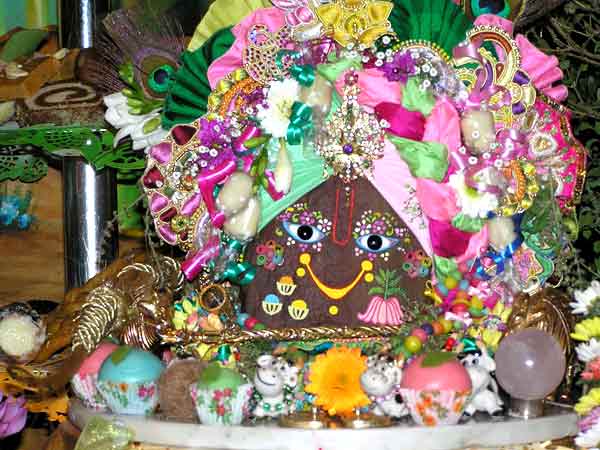
delicious dishes to offer Lord Krishna as 'Bhog'. In the temples,
specifically in Mathura and Nathdwara, the deities are given milk bath,
dressed in new shining attires and decorated with ornaments of dazzling
diamonds, pearls, rubies and other precious stones and metals. Then they
are worshipped, offered prayers and bhajans and also offered delicious
sweets, fruits and eatables that are ceremoniously raised in the form of
a mountain before the idols.
Padwa
The fourth day of diwali celebrations or the day following the
'Amavasya' is 'Kartik Shuddh Padwa', which is also the day when the King
Bali would come out of the 'Patal Lok', the nether land and rule the
'Bhoo Lok', the world as per the boon given to him by 'Batu Waman', Lord
Vishnu. Therefore this day is also known as 'Bali Padyami'. 'Padwa' or
'Varshapratipada' also marks the coronation of King Vikramaditya as
'Vikaram-Samvat' was started from this Padwa day.
Gudi Padwa
The day of Gudi Padwa has special significance for the Hindu families.
There is a custom in which on this holy day the wife applies the 'Tilak'
on the forehead of her husband, garlands him, performs his 'Aarti' and
also prays for his long life. Then the husband gives her a gift in
appreciation of all the tender care that his wife showers on him. Thus
the Gudi Padwa is festival of celebrations and respect of love and
devotion between the wife and the husband. People invite their newly
married daughters with their husbands on this day of Gudi Padwa for
special meals and give them gifts.



