A number of rituals are followed during the
festive season of Diwali. Go through the article and learn about the
customs of Deepavali.
Customs of Diwali
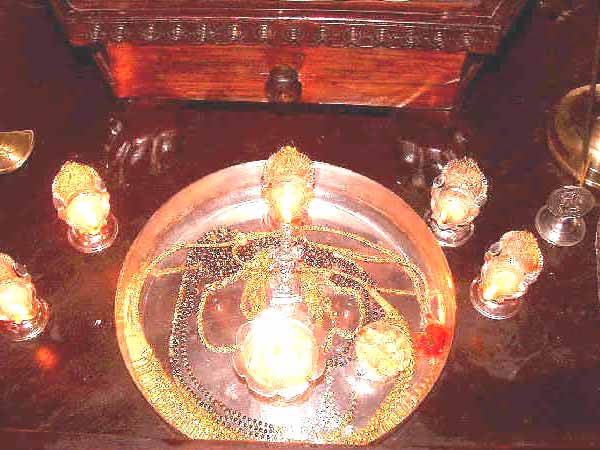
|
Many interesting rituals and traditions have been
attached to the celebrations of Diwali. It is a five-day long festival,
which is celebrated with fun and fervor. The blissful festival calls for
the exchange of gifts, sweets and heartfelt wishes. Fire crackers are
burst and people enjoy wearing new clothes, on the auspicious day.
Although the way of merrymaking is different and the customs are
different, the feel among the people across the length and breadth of
the country remains the same - to spread good cheer. It is the time to
celebrate brotherhood. In the following lines, we have provided complete
information on the customs of Diwali.
Rituals of Dipavali
First Day of Diwali
The first day of Diwali is known as 'Dhanteras'. People renovate,
decorate their houses and workplaces on this day and make traditional
'Rangoli' motifs on the entrance, to welcome Goddess Lakshmi. Lamps and
candles are lit throughout the night. It is considered auspicious to buy
gold and silver on this day. Many people opt for buying new utensils on
this day. In Maharashtra, offerings of lightly pounded dry coriander
seeds with jaggery are made to the Goddess. Rural people revere their
cattle on this day and cows are considered especially auspicious.
Second Day of Diwali
On second day, people take bath before sunrise, anoint themselves with
oil and 'Ubtan' (scrub made up of gram flour and fragrant powders).
Bengalis believe that Goddess Kali killed the demon Raktavija on this
day. A general customs followed during the second day of Diwali is to
burst crackers. People illuminate their homes with diya, as to welcome
the set the mood for celebrations in the following day.
Third Day of Diwali
The third day is the main day of the Diwali festival. Jains have their
own religious significance of the day, because they believe that Lord
Mahavir attained 'Nirvana' (or Eternal Bliss) on the day. Swami
Dayananda Saraswati, the great saint who gave rise to Hindu Renaissance,
also left the mortal world on this day. On this day, people wear new
clothes and share gifts and sweets with their friends and relatives.
Women prepare delicacies and whole house is illuminated with 'diyas' and
candles. Fireworks and crackers are the kids' favorites on this day.
Fourth Day of Diwali
On the 4th day is the 'Govardhan-Puja' or 'Annakoot'. In the temples of
Mathura and Nathadwara, the deities are bathed with milk and adorned
with precious clothes and ornaments. Then offerings of a large variety
of delicacies are made to them.
Fifth Day of Diwali
The 5th day or the last day of this festival is called ' Bhai Duj '. On
this day, sisters invite their brothers and their family to their homes
and treat them with delicacies. In turn, brothers offer them with gifts
and sweets.



