Bakra Eid
Eid al-Adha or 'Sacrifice Feast' is one of the most important and pious festivals of Muslims. It is also known as 'Bakr-Eid' or 'Festival of Sacrifice'. It is commemoration of the willingness of Ibrahim (Abraham) to sacrifice his son following the God's command. The festival starts on the 10th Day of the month Dhul Hijja and lasts for three days. In the Gregorian calendar, the dates of the festival vary from year to year. Muslims pray and listen to the discourse at the Mosque. After the sacrifice, the meat is usually divided into three parts - one for the family, another for relatives & friends while the remaining part is given to the poor and the needy. People celebrate by wearing new clothes, eating and distributing food & sweets, meeting friends and relatives. Eid al-Adha is celebrated worldwide and declared as a Public Holiday in many countries.
Significance - Origin & History
The origin of Eid al-Adha is very poignant as shared by Prophet Muhammad who describes that once Abraham was commanded by Allah to increase the base of Kaaba, which is a black stone and considered as the most pious Muslim holy place in Mecca, Saudi Arabia. Abraham started his journey to Mecca along with his wife and son, Ishmael. During those times, Mecca was an isolated and uninhabited desert with no food and water because of which Abraham had to struggle a lot. But Abraham was the true disciple of Allah and followed all his commands without any complaints.
He once saw in his divine dream that he was sacrificing his son Ishmael by cutting his throat. He shared the same with his son, who requested his father to follow Allah's command and willingly agreed to sacrifice his life. When Abraham was about to cut Ishmael's throat, he was overwhelmed to notice that his son was safe and instead a lamb was sacrificed. Allah was happy with Abraham's deed and accepted his sacrifice because of his faith and loyalty towards Allah which inspired him to sacrifice his own son.
Eid Prayers
Eid al-Adha prayers can be performed either in the Mosque or Eidgah. It is recommended to both men and women because of its virtuousness. It should be performed any time after the sun rises and before it enters the Zuhr or mid-day on the 10th day of Dhul Hijjah. In the event of a disaster or natural calamity, the prayer can be performed on the 11th or the 12th day of Dhul Hijjah.
There are three major beliefs in regards to the Eid prayers and each differs from the other. According to Abu Hanifa, Eid Prayer is a communal commitment (Fard Kifaya). According to Malik ibn Anas and Al Shafi'i , it is optional ( Sunna Mu'akkada) and according to Ahmad ibn Hanbal, Eid prayer is (wajib) means it is the duty of all Muslims and is mandatory for men and people who do not perform it without any valid reason are considered felony.
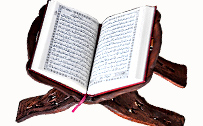
Muslims are highly encouraged to abide by the teachings, sayings, deeds and silent permissions of the Prophet Muhammad as mentioned in Quran (the holy book of Muslims). The prayers should be offered in parishioners. It includes two units called Rakats which has seven takbirs (phrase Allahu-Akbar) in the first Rakat and five takbirs in the second Rakat.
At the end of the prayers and discourse, Muslims hug and pass on good wishes to each other, exchange gifts and visit each other's place. This gives an opportunity to invite non-Muslim friends, co-workers, neighbours, etc. and share the good wishes.
Celebrations - Traditions & Practices
Eid al-Adha is one of the 2 most important festivals for Muslims and they eagerly wait for this to arrive, hence the preparations start in advance. Men, women and children wear the finest clothes and gather in the Eidgah or Mosque to offer prayers. It is a tradition to perform the sacrifice to commemorate Abraham who showed his willingness to sacrifice his first-born and only son, Ishmael.
Hence, People on this day sacrifice goat, camel, sheep, ram, etc. depending upon the region. The meat of the sacrificed animal is preferably divided into three parts out of which the first part is retained by the family, second is distributed amongst the family and relatives while the third part gets distributed amongst the poor and needy people.
The sacrificed animals are called adhiya and/or qurbani. The age and quality of the animal is an important factor to complete the ritual of sacrifice. Millions of animals are slaughtered on the event and meat distributed among the poor and the needy. Observing prayer and sacrificing the meat are the essential rituals to be followed on Eid al-Adha.
Eid al-Adha Date - Islamic Vs Gregorian Calendar
There is a difference between the Islamic and the Gregorian calendar. Islamic calendar follows the Lunar whereas the Gregorian calendar follows the solar calendar. Lunar calendar is 11 days shorter than the solar one. Hence, the date of Eid-Al-Adha varies every year according the Gregorian calendar but it is always the same according to the Islamic Calendar. On the 29th day of the lunar month, corroboration of the definite dates by moon sighting are applied in order to announce the exact dates for both Hajj followed by the Eid-Al-Adha celebrations. The festival is celebrated for the next three days from the listed dates. The pilgrims arrive at Mount Arafat before the listed date and start climbing down after the sunrise of the listed date.