A number of customs are followed during the colorful festival of Baisakhi. Explore about the rituals and traditions of Baisakhi festival, in the article.
Baisakhi Customs
|
The harvest festival of Baisakhi is celebrated with
pomp and gaiety across the vibrant state of Punjab. It falls on the
first day of the Indian calendar month, Vaishakh, which is usually April
13. Apart from being a harvest festival, it holds a special significance
in the Sikh community, because it commemorates the establishment of the
Khalsa (pure) order for the Sikhs. In Punjab, major activities are
concentrated on the prayers conducted in Gurudwaras - the Sikh place of
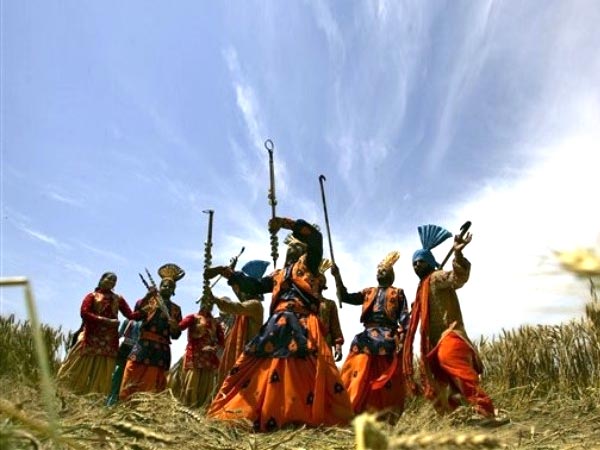
worship. Apart from prayers in Gurudwara, Baisakhi is celebrated as an
energetic festival in the open fields of Punjab, with the colorful
performances of gidda and bhangra dancers. Learn more about the customs
associated with the celebration of Baisakhi, in the article.
Baisakhi Rituals
On the occasion of Baisakhi, all the gurudwaras across India hold
prayer meetings. Guru Granth Sahib, the Holy Book of Sikhs, is
ceremonially taken out, symbolically bathed with milk and water and
placed on its throne. The book is then read out to the congregation of
the gurudwara. Thereafter, the five priests (panch pyare) chant verses
from the Holy Book. After chanting of the verses, Amrita (holy nectar),
prepared in an iron vessel, is distributed among the devotees. The
devotees sip the amrita five time and take a vow to work for fellowship
- the Khalsa Panth.
Religious songs (kirtans) are sung after the amrita is sipped by the
devotees. Later, Guru Granth Sahib is taken out in a procession,
symbolizing the journey made by the five fearless devotees from their
homes to Anandpur, to be baptized by Guru Gobind Singh. Traditional
Punjabi folk dances - the Gidda and Bhangra - and mock duels are
performed during the procession. The parade is typically Punjabi, with
colorful drummers, bands playing religious tunes, people singing holy
songs, and men swinging swords.
Loud Sikh chants such as 'Bole so nihal!' 'Deg teg fateh!' and rhythmic
chants of 'Sat nam' and 'Wahe guru' ring out from the middle of the
singing and drumming. Some men may wear the headgear (bana) of Guru
Nanak, while others that of Guru Gobind Singh. At noon, the Karah Prasad
or sweetened semolina is offered to the Guru to seek his blessings.
Thereafter, the Prasad is distributed among the devotees gathered at the
congregation. The ceremony culminates with a special guru-ka-lanmgar or
the community lunch. People sit down in rows, with their heads covered,
as volunteers serve them with vegetarian meal.
The farmers in Punjab celebrate Baisakhi with fun and fervor, as it is
their harvest festival. The energetic performance of bhangra and gidda
dance fills the atmosphere with the festive spirit, which is reflected
from the eyes of the people. Women clad themselves in their traditional
gidda dress, while men wear the customary attire for bhangra. They dance
to the beat of dhol, in a very joyful atmosphere. The lush green farms,
with fruits, pulses and vegetables ready to be harvested, set the
backdrop for the vibrant festival of Baisakhi, in Punjab.



